
-

Al Baseer Hospital
- Aug 01. 2025
Introduction to Mindful Eating
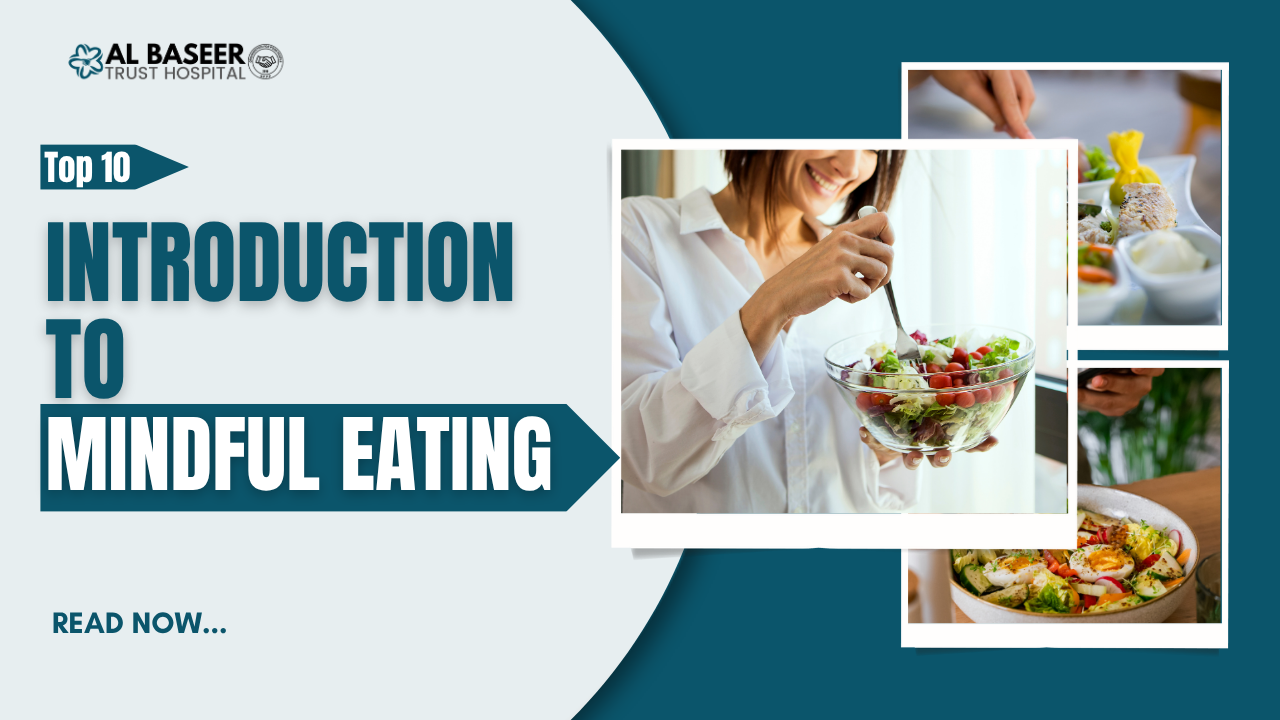
Mindful eating is an approach that requires full attention to the eating experience. It focuses on every step, from serving to the last bite. It requires full attention to the savoring and feelings, and paying attention to bodily hunger and satiety signals
What is Mindful Eating?
Mindful eating is an approach that requires full attention to the eating experience. It focuses on every step, from serving to the last bite. It requires full attention to the savoring and feelings, and paying attention to bodily hunger and satiety signals. Eating does not require counting calories. There is no dieting associated with mindful eating.
Why Mindful Eating is Important
Boredom and the need to multitask are everyday occurrences for many of us. Mindful eating ways and routines help one to disconnect from a boring lifestyle for a short while. It is a way of restoring the bond with the body, improving one’s body, and getting a good relationship with food.
Understanding the Principles of Mindful Eating
Fully Engaged During Mealtimes
The act of eating mindfully means minimal to no disturbance. Distractions such as phones, televisions, and even company while eating should not happen. It is a practice of attention to what’s done gravely to the body. Eating done while losing attention gets a different flavor. Focus is required on every tiny aspect of eating.
Tune to Your Body’s Hunger Signals
Have you considered whether you are truly hungry, or if it's boredom, stress, or exhaustion? Mindful eating encourages you to ask, “What am I feeling in this moment?” You learn to differentiate between emotional and real physical hunger.
Honoring Fullness
Many of us are accustomed to eating to the point of feeling uncomfortably full and to producing exhaustion. Thanks to mindful eating, you learn how to stop consuming food when you are comfortably full. This practice is about respecting your body’s signals. Also, it is perfectly okay to keep food for later.
Recognizing Emotional Triggers
Many people tend to turn to food when they are feeling some emotional issues. Mindful eating helps you recognize the patterns of your emotional eating. So, instead of reaching for chips when you feel sad, you could journal, take a walk, or call a friend.
The Benefits of Mindful Eating
Physical Benefits
Improved Digestion
Taking time to eat and chewing properly helps your digestive system. Mindful eating helps to reduce the chances of bloating, indigestion, and other gut issues.
Healthy Weight Management
Mindful eating encourages listening to your body. While losing weight may not be the goal, mindful eating helps to shed unwanted weight. Eating only in response to real hunger is the first step in mindful eating.
Mental and Emotional Benefits
Reduced Food-Induced Stress or Anxiety
Mindful eating practices cultivate self-compassion and reduce guilt and shame associated with eating, allowing enjoyment and self-acceptance during meals.
Self-Control and Eating Habits Discipline
You start considering meals and snacks as genuine sources of enjoyment, rather than enemies of your health and fitness goals, which can help curb binge eating, restrictive eating, and yo-yo dieting.
Implementation of Mindful Eating
Savor Each Bite with Mindful Eating
Do not rush through meals and take your time savoring every bite. Place your utensil down, cutting between bites, and chew mindfully. This will ensure that every bite is maximized while allowing your body time to register when it is full.
Involve All of Your Senses
Feast your eyes and take a whiff of your food, as your taste buds take a trip, savoring every bite of food. Relish every bite of food and make it an experience rather than a robotic task. This way, you can treat eating as an activity to enjoy, rather than a chore.
Stay Focused with No Distractions
Aim to enjoy meals and snacks in silence. Do not attempt to multitask, and avoid screens. This means you and your plate are the only things that should occupy your mind. This will help you notice a positive difference.
Expressing Gratitude
Appreciate your food and think of the efforts of the one who made it, while nourishing your body. Gratitude fosters intentional eating.
Obstacles to Mindful Eating
Disregarding Emotional Triggers and Eating
The connection between food and emotions is a difficult one to overcome.
In due time, new coping strategies will become available, and the tendency to eat whenever upset or bored will decrease.
Dealing With Social Situations
Group settings and social gatherings often tend to be over meals; for that reason, eating mindfully can be an issue. The trick? Focus on your body signals, and do not rush or slow down for anybody.
Keeping Old Behaviors
2023 has seen the emergence of new culturally relevant eating patterns, allowing for the reckless consumption of meals. This, alongside built marketing strategies, takes advantage of our human nature's tendency to always abide by the bare minimum amount of work. Start with one practiced meal, one in which you eliminate distractions.
The Difference Between Mindful Eating and Dieting
The ‘No-Diet’ Method
No dieting, and no rules means practicing mindful eating, ‘bad’ meals no longer exist. Unlike engagement with food, which relies on external rules, mindful eating revolves around the intelligence of our body.
Why Mindful Eating
Dieting affects the majority of the population with its achievable promises, not being able to deprive oneself is necessarily an act of kindness. Mindful eating is timeless, tailored to each person's requirements.
Mindful Eating for Different Ways of Life
Mindful Eating for the Busy
Even the busiest person does not have time to spare, the five slow bites will go a long way to improve the experience you have not only with your meal, but with life in general.
Mindful Eating for Families
Family gatherings are a great occasion to teach and explore with your loved ones the concept of mindful eating, explain to your family why everybody should participate in talking, savor their food slowly, and relish every single bite.
Mindful Eating for Children
Make mindful eating enjoyable for kids by describing flavors and textures, and never pressure them to clear their plates. Children who practice mindful eating early on often develop healthier relationships with food throughout their lives.
Conclusion
Mindful eating is not a product, service, or quick solution. Embracing mindful eating provides you the ability to relate to food differently and brings you a transformative experience. It encourages you to consume food with purpose, embrace, and appreciate it without the burden of guilt, stress, or mindless actions. If you aim to enhance your well-being, look after your weight, or simply relish food again, the answer is mindful eating.
- Popular Tag:
- Introduction To Mindful Eating
Leave a Replay
Please login to leave your comment




Comment (0)